
Your storefront sign is often the first thing a potential customer notices. If it’s hard to see, hard to read, or out of step with your business, people may pass by without realizing you’re open. The right sign can make your location easier to find, help your business look professional, and give visitors a clear sense of your brand before they walk in.
But which option is right for your space? From dimensional channel letters to window graphics, storefront signs come in a range of styles and formats. This guide covers the main choices and what to consider for your Austin-area business.
Why Your Storefront Sign Matters
A storefront sign does more than display your business name. It helps people recognize your location, find the entrance, and understand what you offer. For a restaurant, that might mean making the name easy to spot from the sidewalk. For a contractor’s office, it could mean helping clients identify the correct suite or building.
A well-planned sign should:
- Make your business name easy to read from the main approach.
- Fit your building and brand.
- Stay visible in daylight and, when needed, after dark.
- Work alongside other signs and window graphics rather than competing with them.
For inspiration, browse the Capital Area Signs portfolio to see examples of sign and graphics projects.
Common Types of Storefront Signs
The best format depends on your building, viewing distance, brand, and how customers approach your entrance. Here are several common options for storefronts.
Channel Letters
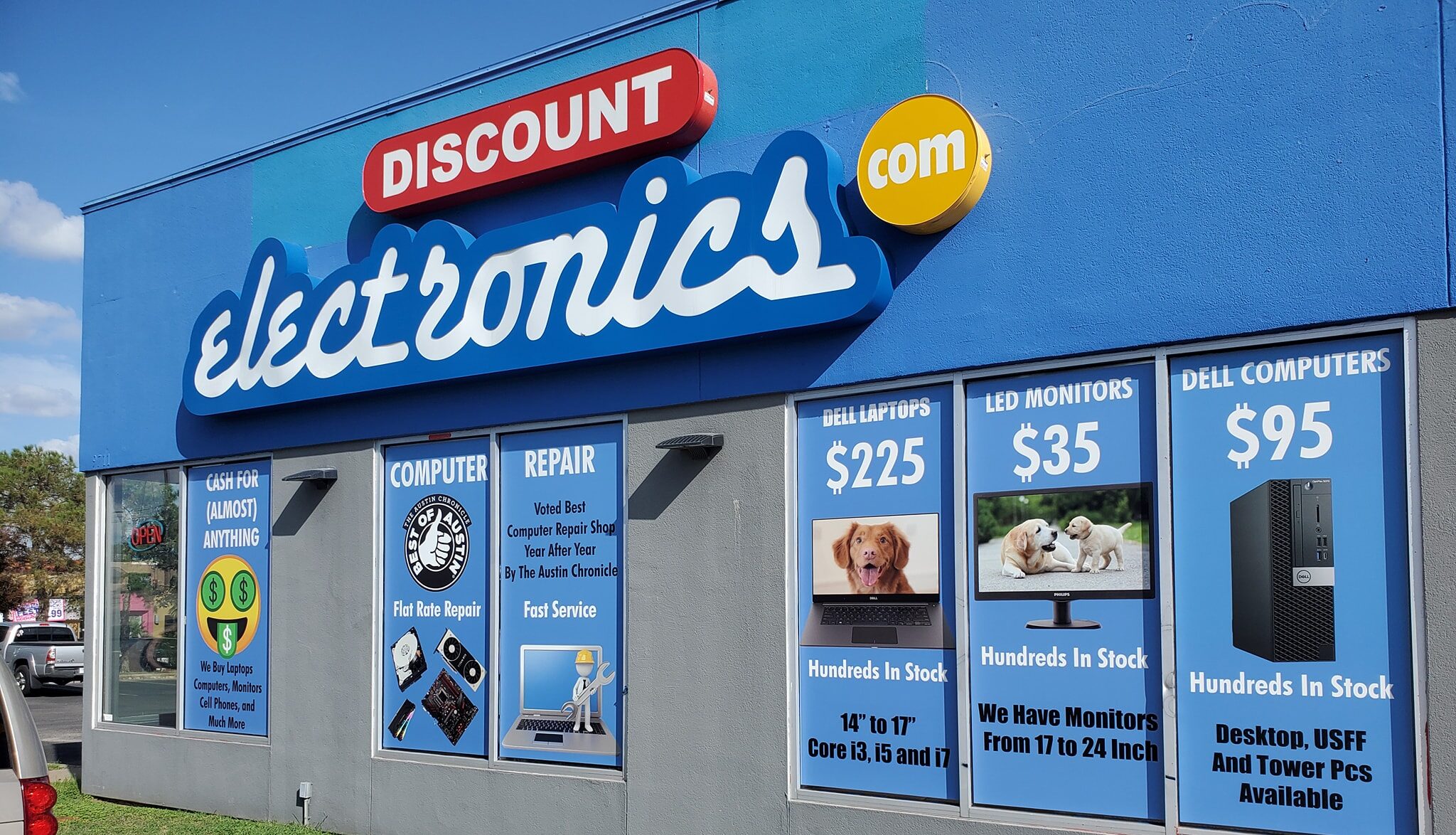
Channel letters are individual, dimensional letters mounted to a building facade. They can give a business name a clear, defined presence, and some versions are illuminated. They’re a popular consideration for businesses that want their name to stand out on a larger facade or within a multi-tenant retail center.
Before choosing them, consider how the letters will look against the building surface and whether illumination suits your location and operating hours.
Illuminated Cabinet Signs
An illuminated cabinet sign uses a sign face set within a box-like structure. It can display a business name or logo and provide visibility after dark. Think about the size and placement of the cabinet in relation to the storefront: it should be easy to see without overwhelming the facade.
Panel Signs
A panel sign presents your name or message on a single flat surface attached to the building. It can be a practical choice for offices, shops, and businesses with a defined sign area. A clear layout and strong contrast help the message read at a glance.
Monument Signs
A monument sign is freestanding and positioned near a property entrance or along its frontage. It can help visitors locate a business before they reach the building, especially where a storefront sits back from the road or shares a property with other businesses. Site conditions and local rules affect whether this option is suitable.
Window Graphics
Window graphics can show your logo, business hours, services, or a short promotional message. They’re useful when you want to make use of storefront glass, but keep the main message simple and leave the entrance and important sightlines clear.
Wall Graphics and Murals
Wall murals and graphics can extend a business’s branding across a larger surface. They can work well for a distinctive facade or for creating a consistent look across a storefront and nearby wall. Plan the design around the wall itself, including windows, doors, and any existing architectural details.

How to Choose the Right Business Sign
1. Start With How Customers See Your Store
Stand where customers will first approach (on the sidewalk, in a parking lot, or along the road) and look at your building. Notice what blocks the view and how much time people have to read the sign. A pedestrian-focused shop may benefit from a sign that’s clear at close range, while a business set back from the road may need to prioritize visibility from farther away.
2. Keep the Main Message Easy to Read
Your business name should lead. Add only the information a customer needs to identify the business or find the entrance. Too many services, taglines, and contact details can make the sign difficult to understand quickly.
Use legible lettering and clear contrast between the sign and its background. If you’re considering a new layout, view it at the approximate size and distance where customers will see it, not just on a phone or computer screen.
3. Match the Sign to Your Building and Brand
A sign should feel like part of your storefront, not an afterthought. Consider your facade’s color, materials, proportions, and existing signs. A bold illuminated sign may fit one retail location, while a simpler panel or window graphic may feel more appropriate for a professional office.
If you’re in a shopping center, ask the property manager about sign criteria before finalizing the design. Centers may have their own requirements for placement, dimensions, or appearance.
4. Consider Lighting and Hours
If customers visit after dark, an illuminated sign may help them identify your business. If you mainly operate during daylight or have a well-lit entrance, a non-illuminated sign could be enough. Think about how lighting will look from nearby homes, businesses, and roads, and check the rules that apply to your address and sign type.
5. Choose Materials for the Austin Climate
Outdoor signage in Central Texas needs to handle heat and UV exposure. Ask about exterior-use materials and finishes designed for those conditions. Capital Area Signs offers signage with materials built for Texas heat and UV.
Discuss where the sign will be installed, how much sun it receives, and what maintenance it may need. The answers can help guide material and finish decisions without assuming every storefront has the same exposure.
6. Check Permits Before Production
Austin’s sign permit information explains that outdoor signage generally requires a sign permit, although some signs may be exempt. Requirements depend on factors such as sign type and sign district. For example, the City lists different drawing requirements for wall and awning signs than for freestanding, roof, and projecting signs. Illuminated signs also involve electrical permitting and inspection.
Check the requirements for your exact address before fabrication. If your business is in Round Rock, Cedar Park, Pflugerville, Georgetown, or another nearby community, check with that city, as Austin’s rules may not apply.
A Straightforward Way to Plan Your Sign
Before requesting a quote, gather a few details:
- Your location: Share the address and whether it’s a standalone storefront or part of a center.
- Your goal: Explain what customers need to notice or find.
- Your preferred sign type: Bring an example, a sketch, or a photo of the building.
- Your artwork: Share your logo and brand colors, if available.
- Your questions: Ask about visibility, lighting, materials, installation, and permit considerations.
Want to explore custom signs in Austin, TX? Capital Area Signs is a locally owned full-service sign and print shop in Austin, operating since 2007. Owner Chris personally handles every project. Explore custom sign options or get in touch to discuss your storefront.
Common Storefront Sign Mistakes to Avoid
- Adding too much copy: Keep the main sign focused on your business name and essential information.
- Designing without considering distance: Check readability from where customers will actually see the sign.
- Ignoring the facade: Account for windows, doors, building colors, and other signs before settling on a layout.
- Waiting until after production to check rules: Confirm permit requirements and property-manager guidelines early.
- Overlooking the full customer journey: Your storefront sign may be only one part of how people find you. Window graphics can support it, while banners and large-format printing can help with temporary promotions or events.

Frequently Asked Questions About Storefront Signs
What type of storefront sign is best for my business?
It depends on your facade, location, viewing distance, brand, and operating hours. Channel letters, panel signs, cabinet signs, window graphics, and monument signs each serve different settings. Share a photo and address to start narrowing down the options.
Do I need a permit for an outdoor storefront sign in Austin?
Austin generally requires a sign permit for outdoor signage, but some signs may be exempt. Requirements depend on the sign and location. Check the City’s sign permit guidance before fabrication.
Should my storefront sign be illuminated?
Illumination may be useful if customers need to find you after dark. Consider your operating hours, the building, nearby surroundings, and applicable requirements. The City of Austin notes that illuminated signs require electrical permitting and inspection.
What should I prepare before asking for a sign quote?
Bring your business name and logo, a photo of the storefront, the project address, and a basic description of what you want the sign to accomplish. If you have landlord or property-manager sign criteria, include those too.
Can window graphics work with a building sign?
Yes. Window graphics can display supporting details such as hours, services, or a logo alongside a building sign. Keep the information readable and make sure the graphics work with the entrance and overall storefront design.
Plan Your Storefront Sign With Capital Area Signs
The right sign starts with a clear goal, a good understanding of the space, and a format that fits how customers approach your business. Capital Area Signs serves Austin, Round Rock, Cedar Park, Pflugerville, and Georgetown with indoor and outdoor business signage, including channel letters, illuminated cabinet signs, monument signs, panel signs, window graphics, and wall murals.
Tell us what you’re planning. Contact Capital Area Signs or call (512) 799-0115 to discuss your storefront sign.