If you’re considering a vehicle wrap or already have one, you’re probably wondering: how long does a vehicle wrap really last? Vehicle wraps are a popular and effective way to advertise your business, protect your vehicle’s paint, and create a professional, eye-catching look on the road. But like any investment, understanding the lifespan of your wrap—and how to maximize it—is crucial.
At Capital Area Signs, we’ve installed hundreds of vehicle wraps throughout Central Texas and beyond. With years of experience in the signage and vehicle wrap industry, we’ve gathered invaluable knowledge about what affects vehicle wrap longevity and how you can care for your wrap to get the best results. In this post, we’ll dive deep into everything you need to know about vehicle wrap lifespan, factors that affect durability, maintenance tips, material choices, installation importance, warranties, and the latest innovations improving wrap technology.
What Is the Typical Lifespan of a Vehicle Wrap?
Based on our extensive experience at Capital Area Signs, a professionally installed, high-quality vehicle wrap will typically last between 5 to 7 years under normal conditions. This timeframe applies when the vehicle is driven regularly but protected from extreme elements and maintained properly.
The lifespan can be shorter or longer depending on a variety of factors, such as:
- Geographic location and climate
- Type of vinyl and laminate used
- Frequency and quality of maintenance
- Installation quality
- How and where the vehicle is parked and used
Vehicles that are regularly washed with care, parked indoors or under shade, and installed with premium materials generally achieve or even exceed the 7-year mark.
What Are the Key Factors Influencing Vehicle Wrap Longevity?
Understanding the variables that impact the lifespan of your wrap helps you make informed decisions. Here are the main factors:
Material Quality
Not all vinyl films are created equal. At Capital Area Signs, we use premium cast vinyl from industry-leading manufacturers. Cast vinyl is known for its durability, flexibility, and excellent color retention. It is engineered to resist shrinking, cracking, and fading. On the other hand, cheaper calendared vinyls tend to be thicker and less flexible, and they often have shorter lifespans, typically around 2 to 4 years.
The quality of the laminate coating on top of the vinyl is equally important. Laminates protect the wrap from UV rays, road debris, chemicals, and scratches, helping maintain its vibrancy and structural integrity over time.
Professional Installation
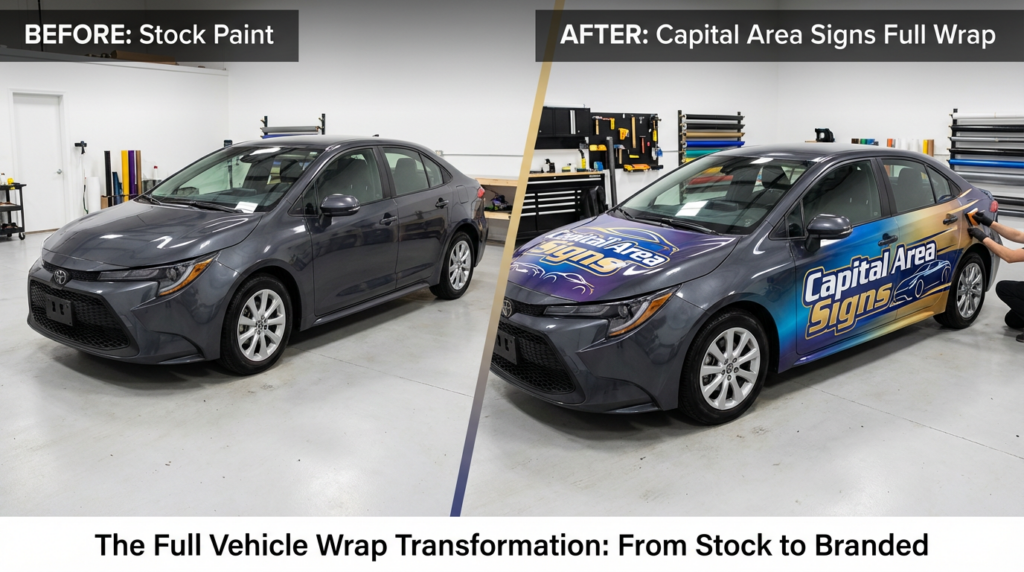
A flawless installation is critical for a wrap’s durability. Even the best vinyl will fail prematurely if installed incorrectly. Our installers prepare the vehicle surface meticulously, removing dirt, grease, and old wax to ensure perfect adhesion. We apply the vinyl under controlled temperature and humidity conditions to avoid bubbles, wrinkles, or edge lifting. The vinyl is carefully wrapped around curves and edges to prevent moisture from getting underneath, which could cause peeling.
Environmental Exposure
Environmental factors have a major impact on how long a wrap lasts. Sunlight (especially UV radiation) fades colors and breaks down vinyl materials. In Central Texas, where sun exposure is intense year-round, UV protection is critical. Humidity and moisture can weaken adhesives and cause vinyl to lift if trapped under the wrap during installation. Extreme temperature swings—hot summers and cold winters—can also cause the vinyl to expand and contract, stressing the material.
Maintenance and Care
How you care for your wrap has a huge effect on its longevity. Regular washing with gentle soap and water, avoiding abrasive brushes and harsh chemicals, and parking in shaded or covered areas all help protect the vinyl. Quick removal of contaminants such as bird droppings, tree sap, and bug splatter prevents staining and damage. A well-maintained wrap can look fresh for years longer than one that is neglected.
Vehicle Usage and Storage
Vehicles used in harsh conditions—off-road, industrial sites, or areas with heavy pollution—may experience accelerated wear and tear on the wrap. Similarly, vehicles parked outdoors in direct sunlight all day, every day, face more rapid fading than those parked in garages or under shade.
Real-World Case Studies: When Wraps Last Longer—or Shorter—Than Average
We’ve seen a wide range of wrap lifespans depending on client habits and environments.
- Long-Lasting Wraps: A local Austin delivery fleet client had their vehicles wrapped with premium cast vinyl and UV-protective laminate. Their drivers parked mainly indoors or under loading dock covers and followed our recommended cleaning schedule. As a result, the wraps remained vibrant and intact for over 7 years, far exceeding typical expectations.
- Shorter Lifespan Wraps: Another client used their vehicle primarily as a mobile advertisement, often parked outdoors under full sun exposure and rarely cleaned. They experienced fading and minor peeling after only 3 years. This shorter lifespan was largely due to intense UV exposure and lack of maintenance.
These examples illustrate how important the environment and upkeep are in determining wrap longevity.
How Does Climate Affect the Durability of Vehicle Wraps?
Climate conditions have a direct impact on the vinyl’s durability:
- Sun Exposure: UV rays from the sun cause the vinyl’s pigments to fade and the adhesive to break down, leading to peeling and brittleness.
- Humidity: High humidity can trap moisture beneath the vinyl if the surface isn’t perfectly dry during installation, causing adhesion problems.
- Temperature Extremes: Heat causes vinyl to expand and cold causes it to contract. These changes, especially when rapid, can stress the vinyl and lead to cracks or lifting.
In Central Texas’s hot, sunny climate, using UV-resistant materials and laminates combined with proper installation techniques is essential to maximize the life of your wrap.
How to Maintain Your Vehicle Wrap for Maximum Longevity
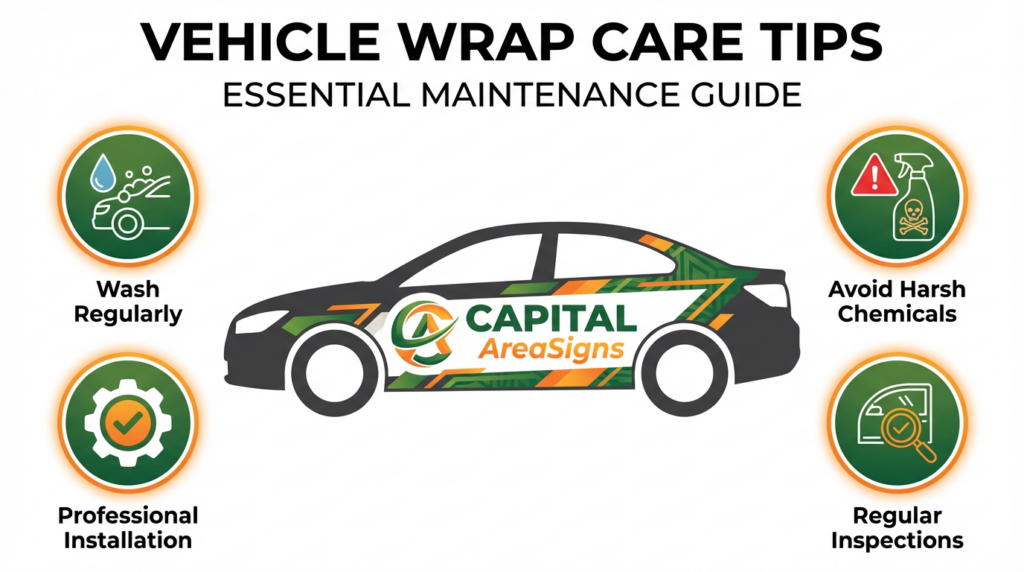
Maintaining your wrap is straightforward but essential for protecting your investment. Here are our top maintenance tips:
- Wash Regularly: Use a mild detergent or vehicle wash soap mixed with water. Hand wash your vehicle with a soft sponge or microfiber cloth.
- Avoid Automatic Car Washes: Many automated washes use harsh brushes that can scratch or lift the vinyl. Opt for hand washing or touchless car washes.
- Dry Gently: Use a soft microfiber towel or chamois to dry your vehicle, avoiding scratches and water spots.
- Park Smart: Whenever possible, park your vehicle in shaded or covered areas to limit sun exposure.
- Promptly Remove Contaminants: Bird droppings, tree sap, bug splatter, and road grime can cause staining or damage if left too long. Clean these off as soon as possible.
- Inspect Regularly: Check for any signs of bubbling, peeling, or damage and address problems early with professional assistance.
What Types of Vinyl and Finishes Affect Wrap Longevity?
The choice of material and finish plays a large role in how long your wrap will last.
- Cast Vinyl: Our preferred material for long-term wraps, cast vinyl is thin, flexible, and resistant to shrinkage and cracking. It conforms well to complex vehicle shapes and lasts up to 7 years or more.
- Calendared Vinyl: This is a thicker vinyl often used for shorter-term applications or flat surfaces. It typically lasts 2 to 4 years and is less flexible.
- Finishes: Wraps are available in glossy, matte, satin, chrome, carbon fiber, and other textures. Glossy and satin finishes often include a laminate that protects against UV and scratches, increasing lifespan. Matte finishes provide a unique look but can be more susceptible to showing scratches.
At Capital Area Signs, we recommend premium cast vinyl with UV-resistant laminate for the best combination of durability and visual impact.
Why Professional Installation Is Crucial for Wrap Longevity
Even the highest quality vinyl will fail prematurely if not installed properly. The installation process includes:
- Thorough Surface Preparation: Cleaning the vehicle surface thoroughly to remove dirt, oils, and wax is essential for strong adhesion.
- Temperature Control: Vinyl must be installed within specific temperature ranges to ensure flexibility and proper bonding.
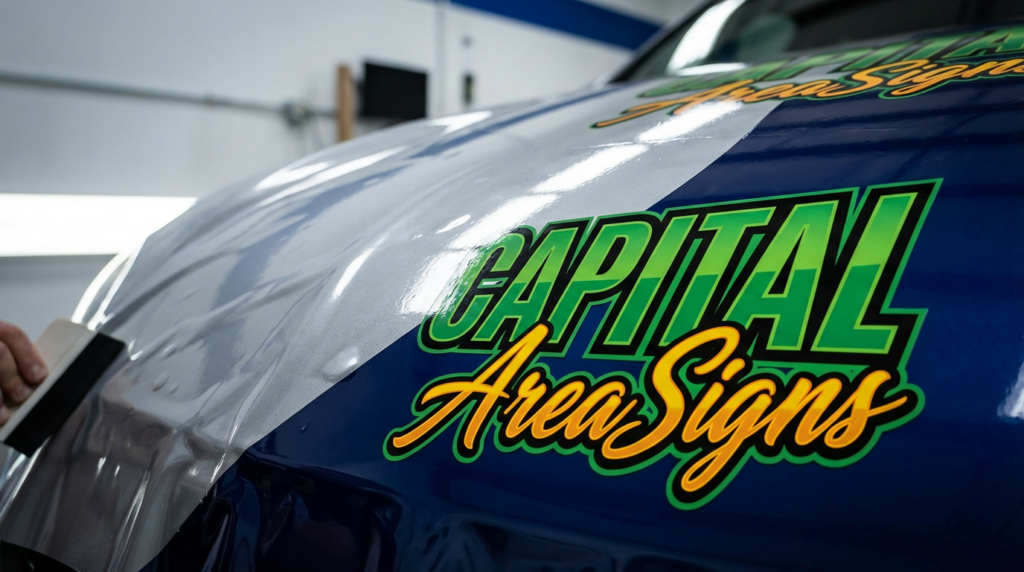
- Application Techniques: Expert installers use heat guns and squeegees skillfully to avoid bubbles, wrinkles, and stretching. Edges are carefully sealed to prevent moisture ingress.
- Experience: Professional installers recognize and address unique challenges such as complex vehicle curves and body seams.
Poor installation leads to bubbling, peeling, and shortened wrap lifespan. At Capital Area Signs, our certified installers follow strict best practices to maximize durability and ensure a flawless finish.
Do We Offer Warranties? What’s Covered?
Yes. We stand behind our materials and workmanship with a limited warranty on all vehicle wraps. Our warranties typically cover:
- Material defects such as premature fading, cracking, peeling, or delamination.
- Installation defects like bubbling or lifting due to improper application.
The warranty period ranges from 3 to 5 years, depending on the product and care practices. It does not cover damage caused by accidents, misuse, or improper maintenance.
We provide detailed warranty terms and ongoing support to ensure your satisfaction and peace of mind.
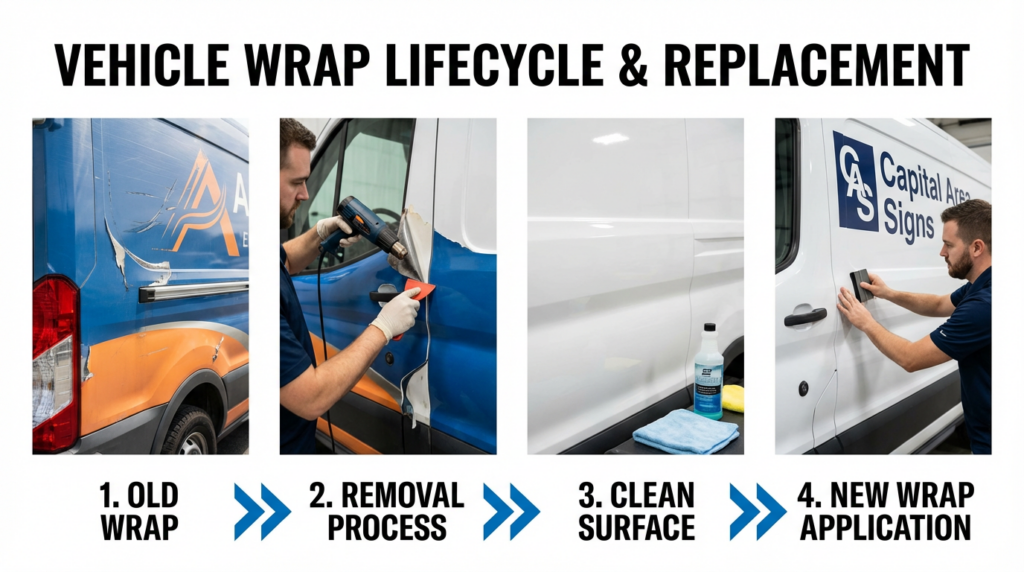
When Should You Replace or Refresh Your Vehicle Wrap?
Signs that it’s time to consider a new wrap or refresh include:
- Noticeable fading or dullness in color.
- Peeling, bubbling, or other adhesive failures.
- Physical damage such as tears or scratches.
- Changes in branding, logo, or marketing messaging.
- Wraps older than 5 to 7 years often benefit from replacement to maintain a fresh, professional appearance.
Regular inspections and professional advice can help you determine the right time to refresh your wrap.
Innovations and Trends Improving Vehicle Wrap Lifespan
The vehicle wrap industry continues to innovate rapidly. Recent developments include:
- Improved UV-Resistant Laminates: These protect colors from fading and surfaces from scratches and chemicals.
- Advanced Cast Vinyl Films: Newer vinyls are thinner, more flexible, yet more durable than ever.
- Protective Overlay Films: Clear films applied on top of wraps protect against road debris and abrasions.
- Eco-Friendly Materials: Manufacturers are developing vinyl that’s more environmentally friendly and easier to recycle.
- Enhanced Digital Printing: New printing technologies produce sharper, longer-lasting colors with improved fade resistance.
Capital Area Signs continuously updates our materials and methods to provide you with the best possible wrap products.
Final Thoughts
A vehicle wrap is a powerful marketing tool and a valuable asset that requires thoughtful investment and care. At Capital Area Signs, we combine premium materials, expert installation, and client education to ensure your wrap looks fantastic and lasts for years. If you’re ready to enhance your brand’s visibility or want to learn more about vehicle wraps, contact Capital Area Signs today. We’re here to help you get the most from your vehicle wrap investment.